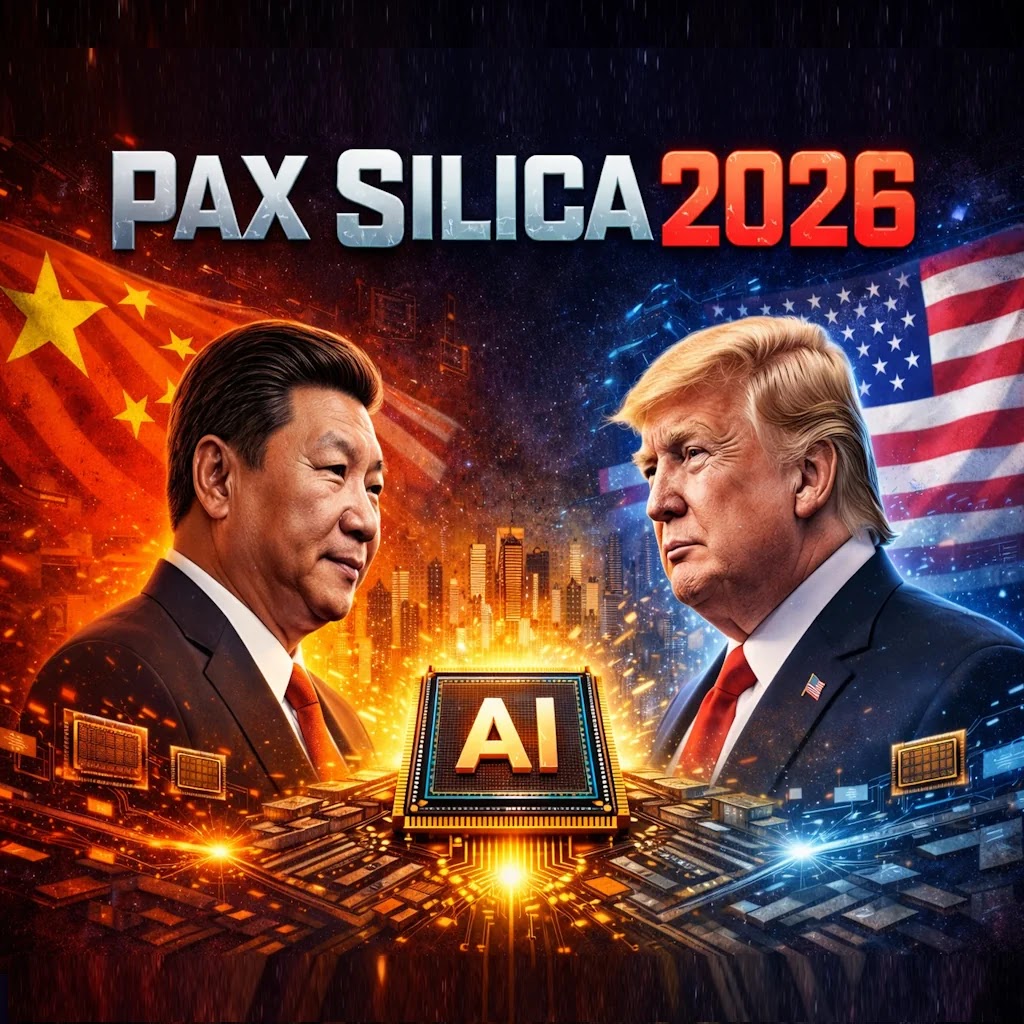
Most people think global technology competition is about apps, software, or startups. In reality, the biggest shifts happen quietly in supply chains, chips, and infrastructure. The events of February 2026 prove this clearly. A single agreement can redraw how data flows, how AI is built, and who controls the future.
The Pax Silica framework is not just another international partnership. It is a structural shift in how advanced technology is produced and shared. For businesses, investors, and even students preparing for future careers, understanding this shift is no longer optional. It directly affects jobs, pricing, innovation, and long term economic power.
What Pax Silica Really Means in 2026
Pax Silica is essentially a trusted technology network led by the United States with participation from India, Japan, and parts of Europe. Its main goal is simple. Build secure, high performance AI systems without depending on rival ecosystems.
This is not just about politics. It is about control over critical layers of technology such as:
- Advanced semiconductor manufacturing
- AI training infrastructure and data centers
- Rare earth material processing
- Secure communication and encryption systems
In practical terms, companies inside this network get priority access to cutting edge chips and research. Those outside may face delays, restrictions, or higher costs.
Why This Shift Happened Now
From an analysis perspective, three triggers pushed this transition:
- Supply chain disruptions after 2020 exposed overdependence on single regions
- AI models now require massive compute infrastructure, making hardware control critical
- Geopolitical trust has become a deciding factor in technology sharing
China’s Counter Strategy Explained Simply
China’s response is not reactive. It is structured and long term. Instead of relying on external systems, it is accelerating a fully self sufficient ecosystem.
Key Elements of China’s Approach
- Local chip development: Scaling domestic processors like Huawei Ascend series
- Industrial AI deployment: Focus on manufacturing, logistics, and automation
- Resource control: Dominating rare earth refining and export control
From a business lens, this creates a dual system world. One network operates on global collaboration with restrictions. The other operates on internal scale and control.
Market Reality: The $2.5 Trillion AI Infrastructure Boom
The numbers often sound exaggerated until you break them down. AI is no longer just cloud software. It requires:
- Massive data centers consuming high power
- Specialized chips designed for AI workloads
- Cooling systems and energy infrastructure
- Secure data pipelines and storage networks
When you combine all these layers, the spending reaches trillions. This is similar to how highways, railways, and telecom networks were built in earlier decades, but now the asset is compute power.
AI Infrastructure Spending Projection (Billions USD)
*Spending driven by data centers, chips, and energy infrastructure.*
Real World Use Cases: How This Affects Businesses
1. Small Manufacturing Businesses
If you run a manufacturing unit, AI tools for automation may soon depend on which ecosystem your suppliers belong to. Access to affordable AI hardware could become a competitive advantage.
2. Startups and Tech Entrepreneurs
Startups building AI products will need to choose their infrastructure early. Switching later may become costly due to compatibility and regulatory differences.
3. Freelancers and Developers
Even individual developers may notice differences in API access, compute pricing, and model capabilities depending on region and partnerships.
Pros and Cons of the Pax Silica System
Advantages
- Higher security and trust in technology sharing
- Faster innovation in trusted networks
- Reduced dependency on single country supply chains
Limitations
- Increased cost due to restricted supply chains
- Limited global collaboration in some areas
- Risk of fragmentation in global tech standards
Who Should Pay Close Attention
- Students planning careers in AI, semiconductors, or data science
- Business owners dependent on global supply chains
- Investors tracking long term infrastructure trends
Who May Not Need Immediate Action
- Local service businesses with minimal tech dependency
- Short term traders focused only on daily market movement
Best Practices to Navigate the Tech Cold War
- Diversify suppliers instead of relying on a single region
- Track policy changes, not just technology updates
- Invest time in understanding infrastructure, not just apps
- Adopt flexible systems that can switch between platforms
From practical observation, businesses that adapt early to structural shifts tend to outperform those reacting late. This pattern has repeated across multiple economic cycles.
Conclusion: A Shift from Globalization to Controlled Networks
The events of 2026 are not just another phase in technology growth. They represent a deeper transition from open globalization to structured, trust based networks. In this environment, access matters as much as capability.
The key takeaway is simple. Focus on where infrastructure is being built and who controls it. That is where long term value will emerge.
Frequently Asked Questions