Passwords, OTPs, and centralized identity systems are struggling to keep up with modern cyber threats. Large scale data leaks, deepfake fraud, and AI generated impersonation attacks have exposed a major weakness in traditional digital identity models. In 2026, the conversation is no longer only about protecting personal data. It is about who truly owns it.
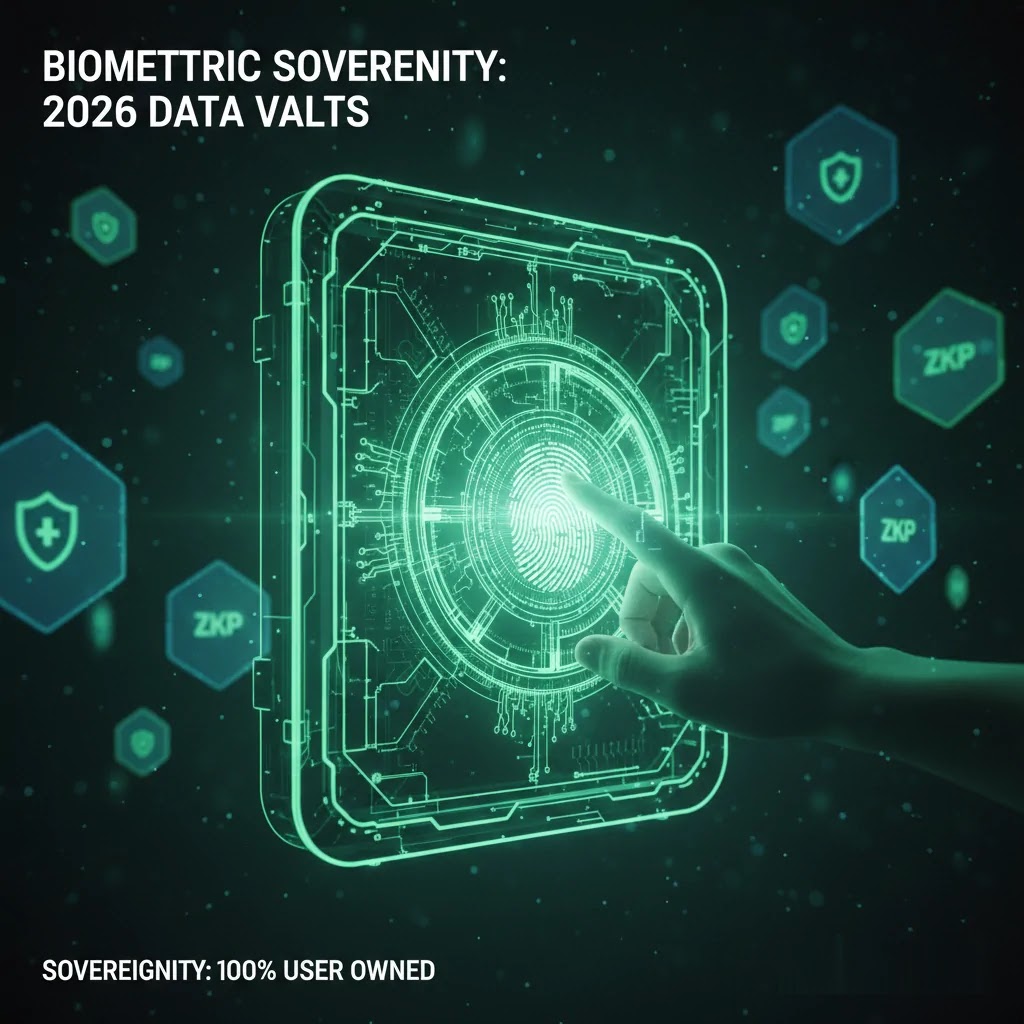
Biometric Sovereignty is emerging as a serious solution. Instead of storing fingerprints, facial scans, or identity records inside corporate databases, users now have the option to keep sensitive biometric information inside encrypted Personal Data Vaults (PDVs). These systems are designed to give individuals direct control over how identity data is shared, verified, and revoked.
For businesses, governments, and even small online platforms, this shift matters because identity fraud is becoming more expensive every year. A single fake onboarding process can expose financial systems, customer databases, or healthcare records. In response, privacy focused digital identity systems are becoming a strategic requirement instead of a niche technology trend.
1. What Are Personal Data Vaults and Why Are They Important?
A Personal Data Vault is a secure digital environment where individuals store identity credentials, biometric markers, medical documents, payment permissions, and access certificates. Unlike older systems where companies stored user data centrally, PDVs are designed around user ownership.
In practical use, the vault works like a highly secure digital locker. However, instead of simply storing files, it can actively verify identity without exposing the raw information itself.
How Verification Works in Modern Identity Systems
Most modern PDVs rely on technologies such as:
- Zero Knowledge Proofs (ZKP), to confirm identity without revealing full data
- On-device biometric matching, where fingerprints or facial scans never leave the device
- Decentralized identifiers (DIDs), to reduce dependency on centralized databases
- Hardware level encryption, to protect identity credentials from remote attacks
For example, a banking application could verify that a user is above 18 years old without requesting a complete ID card upload. This reduces unnecessary exposure of personal information.
From an operational perspective, this approach also lowers legal and compliance risks for businesses handling customer data.
2. The 2026 EUDI Wallet Rollout Is Changing Global Standards
The European Union’s Digital Identity Wallet initiative is one of the strongest signals that sovereign identity systems are moving into mainstream adoption. Under the EUDI framework, citizens will be able to carry government verified credentials directly on personal devices.
This includes:
- National IDs
- Educational certificates
- Healthcare records
- Travel documentation
- Business licenses
- Digital payment authorization
What makes this important is interoperability. Instead of repeatedly uploading documents across different services, users can securely share verified credentials only when required.
During recent digital identity pilot programs, one consistent improvement was reduced onboarding friction. Users completed account verification faster because they did not need repeated manual document uploads.
Small businesses may benefit significantly from this transition. E commerce sellers, fintech startups, and online service providers often struggle with fraud prevention costs. PDV based onboarding can simplify compliance while improving customer trust.
Real World Business Impact
Consider a small digital lending startup. Traditional KYC systems often require:
- Document uploads
- Manual verification teams
- Third party storage providers
- Risk monitoring software
With sovereign identity systems, users may authorize verified credentials directly from their own vault. This can reduce onboarding time while lowering exposure to leaked document databases.
Digital Identity Models: 2024 vs. 2026
| Feature | Centralized (Legacy) | Sovereign (2026) |
|---|---|---|
| Data Custody | Corporate Cloud | User-Owned PDV |
| Verification Method | Full Data Disclosure | Zero-Knowledge Proofs |
| Interoperability | App-Specific Silos | Cross-Platform eIDAS 2.0 |
3. Why Deepfake Fraud Is Accelerating the Shift to Biometric Sovereignty
One of the biggest drivers behind biometric sovereignty is the rise of AI generated identity fraud. Voice cloning, synthetic video calls, and fake verification documents have become more convincing in 2026.
Traditional security systems based only on passwords or OTPs are increasingly vulnerable. Even facial recognition systems that depend entirely on cloud based processing can be manipulated if biometric databases are exposed.
Modern PDV systems reduce this risk because sensitive identity data often stays on the user’s own device. Verification happens locally or through encrypted proofs instead of sending complete biometric datasets across multiple servers.
Security researchers are also focusing on multi-layer authentication models that combine:
- Biometric verification
- Behavioral analysis
- Device level trust validation
- Cryptographic proof systems
This layered approach is becoming critical for sectors like digital banking, healthcare, defense infrastructure, and AI agent ecosystems.
For ordinary users, the long term advantage is simple. Fewer organizations permanently storing personal biometric information means fewer opportunities for large scale identity leaks.
4. Real World Use Cases for Personal Data Vaults
Biometric sovereignty is not limited to government systems. Multiple industries are already testing practical applications.
Healthcare
Patients can securely share medical history with hospitals without permanently transferring ownership of health records.
Financial Services
Digital banks can reduce fraud risk during remote onboarding while improving compliance processes.
Smart Cities
Residents may use secure digital identities for transportation, voting systems, public services, and property access.
Remote Work
Companies handling confidential information can verify employees without depending entirely on centralized databases.
AI Agent Ecosystems
As Agentic AI systems become more autonomous, identity verification will become essential for controlling access rights and digital transactions.
5. A $7.4 Billion Sovereignty Market
The Decentralized Identity Market has expanded rapidly and is projected to reach approximately $7.4 billion in 2026. Investment is increasing because both public and private sectors now see digital identity infrastructure as a long term strategic layer of the internet economy.
Another important factor is regulation. Privacy laws are becoming stricter in many regions, which makes centralized storage models more expensive to maintain.
Technology providers are also integrating sovereign identity systems into areas such as:
- Digital healthcare
- Cross border payments
- Smart manufacturing
- Connected vehicles
- Government services
- AI powered digital assistants
Decentralized Identity Market Valuation ($ Billions)
6. Pros and Cons of Biometric Sovereignty Systems
Advantages
- Greater user control over identity data
- Reduced exposure to mass database leaks
- Faster digital onboarding experiences
- Improved compliance with privacy regulations
- Better resistance against AI generated fraud
Limitations and Risks
- Complexity for non-technical users
- Recovery challenges if devices are lost
- Dependence on strong device security
- Interoperability gaps between countries
- Potential misuse if governance standards remain weak
From a practical standpoint, user education may become just as important as the technology itself. Even highly secure systems can fail if people do not understand backup recovery or permission management.
7. Best Practices for Businesses and Users
For Businesses
- Minimize unnecessary biometric data collection
- Use decentralized verification where possible
- Prioritize transparent consent systems
- Implement hardware based encryption support
- Regularly audit third party identity vendors
For Individual Users
- Enable device level encryption
- Use trusted identity wallet providers
- Keep recovery credentials offline and secure
- Review app permissions regularly
- Avoid oversharing biometric information online
As identity systems become more decentralized, responsibility also shifts toward the user. Managing digital identity securely may eventually become as important as managing bank accounts today.
8. Frequently Asked Questions
Are Personal Data Vaults safer than cloud databases?
In many cases, yes. PDVs reduce reliance on centralized databases that can become high value targets for hackers. However, device security and proper encryption remain critical.
Can biometric sovereignty eliminate identity theft completely?
No system can eliminate all risks completely. However, decentralized identity models significantly reduce mass exposure risks associated with centralized storage.
Will governments control Personal Data Vaults?
Different countries are taking different approaches. Some systems are government certified, while others are fully decentralized and privately managed.
How do Zero Knowledge Proofs improve privacy?
ZKPs allow users to confirm information without revealing the underlying data itself. This helps reduce unnecessary personal data exposure.
Can small businesses benefit from decentralized identity systems?
Yes. Smaller companies can reduce fraud prevention costs, simplify compliance workflows, and improve customer trust during onboarding.
KOLAACE™ Verdict
Biometric sovereignty is becoming one of the defining digital infrastructure shifts of 2026. The movement toward Personal Data Vaults reflects a larger change in how identity is managed online. Instead of companies owning identity databases, users are gradually gaining direct control over their digital credentials.
For businesses, this transition could reduce fraud exposure and improve regulatory compliance. For individuals, it creates a more privacy focused digital experience where sensitive biometric information remains under personal control.
As AI systems, smart cities, and digital finance platforms continue to expand, decentralized identity infrastructure may become as foundational as internet security itself. Explore more insights through our identity trends coverage.